
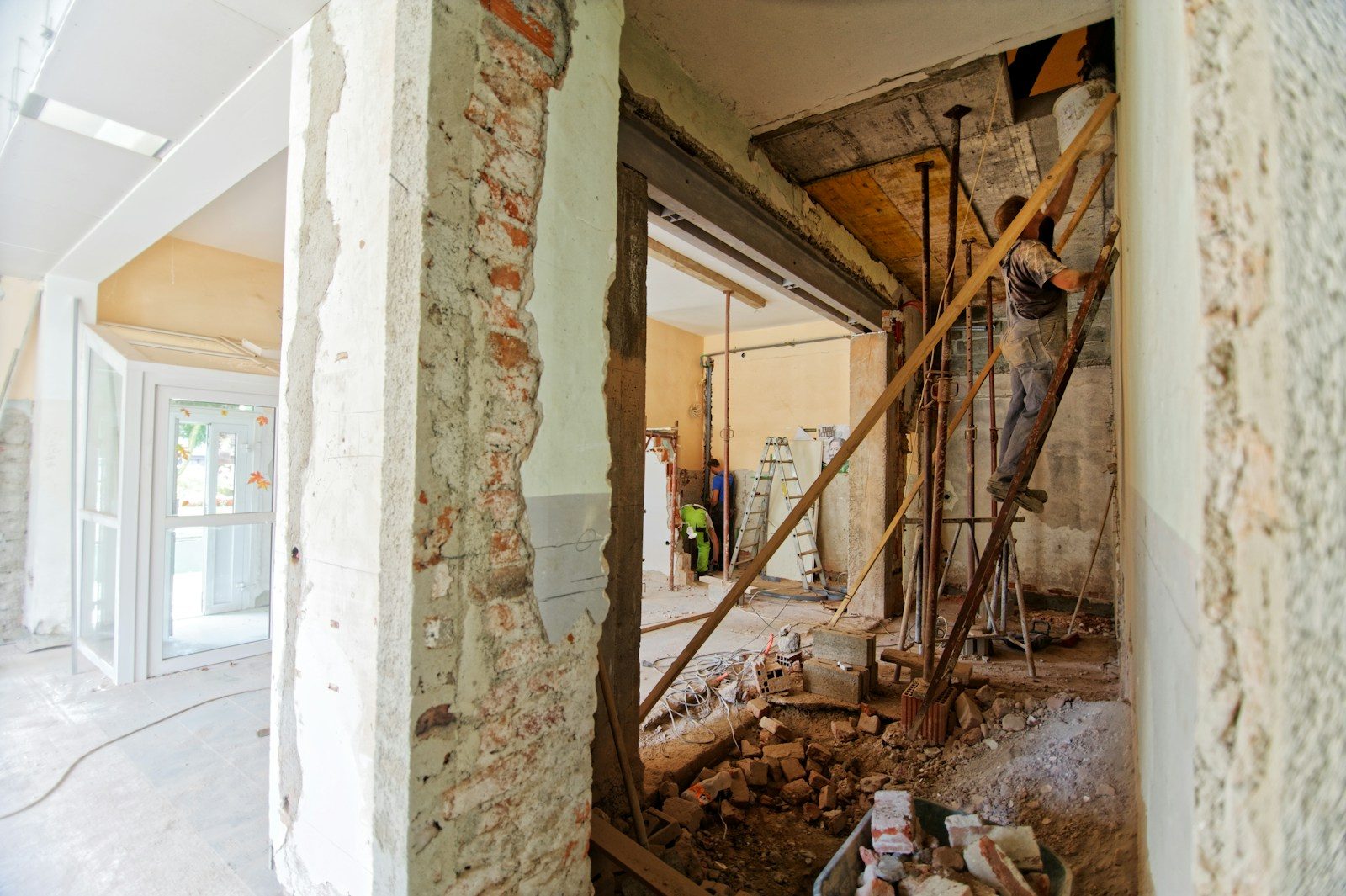
The structural restoration of historic buildings and civil infrastructure demands a rigorous mathematical framework to reconcile the conservation of non-homogeneous, deteriorated materials with modern structural safety, regulatory, and spatial constraints. The Critical Path Method (CPM) serves as the primary deterministic control algorithm for modeling these complex, interrelated activities. Unlike contemporary construction projects that utilize standardized assemblies, historic preservation involves high levels of epistemic uncertainty regarding material properties, subsurface conditions, and structural load paths. By systematically applying first-principles engineering logic and advanced network analysis, CPM modeling mitigates structural collapse risks, optimizes highly constrained specialized labor resources, and ensures regulatory compliance through precise dependency sequencing.
1. Structural Integrity and Non-Destructive Testing (NDT) Sequencing
The structural restoration of historic load-bearing masonry, timber framing, and early reinforced concrete structures must begin with an empirical assessment of material degradation. Non-Destructive Testing (NDT) methodologies—such as ground-penetrating radar (GPR), ultrasonic pulse velocity (UPV) testing, and thermography—are critical for mapping internal voids, moisture ingress, and structural discontinuities. Because physical interventions can catastrophically alter load distribution paths in compromised structures, NDT tasks must be mathematically established as absolute predecessors to any invasive demolition, shoring, or structural stabilization tasks. In a CPM network diagram, this relationship is modeled using Finish-to-Start (FS) relationships with zero lag, ensuring no structural modification occurs prior to complete diagnostic data acquisition.
The integration of NDT results into the CPM logic network directly influences the duration calibration of subsequent stabilization activities. For instance, if UPV testing reveals localized compressive strength degradation in a load-bearing brick pier, the subsequent masonry repointing and grout injection tasks must undergo dynamic duration adjustment. The scheduling engine must calculate the scope of repair based on the volumetric density of voids identified during NDT. Consequently, the CPM network must incorporate conditional logic branches where the output of diagnostic milestones determines the activation of specific structural reinforcement sub-nets, preventing both under-scoping and premature structural loading.
To manage the inherent uncertainty of historic structures, a hybrid Program Evaluation and Review Technique (PERT) and CPM approach is applied to diagnostic phases. Hidden structural defects, such as internal wood rot or corroded structural ironwork concealed within masonry, present stochastic scheduling variables. By assigning optimistic ($a$), pessimistic ($b$), and most likely ($m$) durations to diagnostic and initial exploratory tasks, the scheduler calculates the expected duration ($t_e = (a + 4m + b) / 6$) and variance ($sigma^2 = ((b – a) / 6)^2$) for the critical path. This statistical buffer is integrated directly into the CPM network as a diagnostic contingency phase, protecting downstream activities from sudden critical path shifts when hidden anomalies are uncovered.
Furthermore, the installation of structural telemetry systems—including vibrating wire strain gauges, tiltmeters, and crack-monitoring sensors—must be sequenced as an independent, critical path milestone prior to any major structural unloading or shoring operations. The physical installation and calibration lead times of these sensors represent fixed durations that constrain the start of physical intervention works. In the CPM network, a Start-to-Start (SS) relationship with a positive lag is established between sensor calibration and the initiation of temporary shoring. This lag corresponds to the baseline data-acquisition period required to establish a thermal and environmental equilibrium profile of the structure.
Finally, structural load redistribution during temporary shoring installation requires rigorous mathematical sequencing within the CPM framework. Shoring must be executed in highly calculated, incremental phases to prevent sudden eccentric loading on adjacent historic structural elements. The CPM logic must model this as a series of iterative, sequential tasks where each shoring stage is separated by a mandatory "settlement and monitoring" lag period. The duration of these lags is governed by structural engineering calculations of material creep and elastic deformation, ensuring that the critical path respects the physical rate limits of structural load transfer.
2. Lead-Time Modeling for Bespoke and Heritage Materials
The procurement of authentic heritage materials presents a highly volatile supply chain variable that directly affects CPM critical path stability. Restoring historic infrastructure frequently requires sourcing non-standardized materials, such as specific geological strata of dimension stone, hand-molded clay bricks fired in traditional kilns, or old-growth timber of specific species and structural grades. Because these materials cannot be acquired from commercial distributors, their lead times are highly variable and prone to significant disruptions. In a CPM network, these procurement activities must be modeled as long-lead acquisition paths with explicit Finish-to-Start dependencies tied directly to their respective installation tasks on site.
To model these supply chain constraints within the CPM network, schedulers must utilize Finish-to-Start lags that incorporate both production and transport vectors. For example, matching a historic limestone facade requires quarry extraction, petrographic analysis for compatibility, block cutting, and custom carving by stone conservators. Each of these steps must be represented as a discrete activity with its own resource allocation and logical constraints. By decomposing the procurement cycle into granular tasks rather than a single, monolithic "material delivery" milestone, the CPM engine can accurately identify early warning signs of slip on the critical path and calculate the float of alternative material options.
Resource-Constrained Scheduling (RCS) algorithms must be applied to the specialized artisans and conservators who prepare these materials. Because the pool of skilled craftspersons capable of executing historic stone carving, timber joinery, or lime plastering is severely limited, these resources represent a hard constraint. The CPM network must utilize resource leveling heuristics to smooth the peak demands for these specialists, preventing overallocation. If the resource demand exceeds the available limit, the CPM engine must recalculate the schedule, often extending the duration of non-critical activities or shifting the critical path to reflect resource-driven constraints rather than physical logic.
[Quarry Extraction] --> [Petrographic Analysis] --> [Stone Carving] --> [On-Site Installation]
                                                                            ^
           ---> [Artisan Resource Leveling (Heuristic Constraint)] --------/
Additionally, the physical curing kinetics of historic materials impose absolute, non-negotiable duration constraints on the CPM network. Unlike modern Portland cement-based mortars, which develop high early strength rapidly, traditional natural hydraulic lime (NHL) and non-hydraulic lime mortars require prolonged periods of atmospheric carbonation and moisture retention to cure. The CPM network must model these curing intervals as Finish-to-Start lags with durations dictated by environmental physics. For instance, a multi-wythe masonry reconstruction task must include a minimum 28-day curing lag before any substantial vertical load-bearing capacity can be assumed, directly restricting the start of subsequent floor joist installations or upper-level masonry work.
To safeguard the critical path against supply chain and curing delays, Critical Chain Buffer Management (CCBM) principles can be integrated into the CPM framework. Instead of adding hidden safety margins to individual procurement and curing tasks—which leads to the expansion of task durations and student syndrome—the safety margins are stripped from individual activities and aggregated into a project-level feeding buffer. This feeding buffer is strategically inserted at the confluence of the material procurement chain and the primary on-site construction sequence. This mathematical approach ensures that any delay in custom brick fabrication or timber seasoning is absorbed by the buffer without shifting the project completion date.
3. Micro-Deformation Monitoring and Dynamic Scheduling Adjustments
Historic masonry and timber structures exhibit highly sensitive viscoelastic behaviors under changing load conditions, requiring real-time micro-deformation monitoring during structural interventions. When underpinning historic foundations or introducing new structural elements, the rate of settlement or lateral deflection must be monitored using high-precision telemetry. In a CPM scheduling model, these physical monitoring regimes cannot be treated as passive, parallel activities; they must be integrated as active, feedback-driven logic gates. If a tiltmeter or strain gauge exceeds a pre-established threshold, the physical work must stop, and the CPM schedule must dynamically adapt to a stabilization sub-network.
Establishing this real-time feedback loop requires interfacing the CPM scheduling engine with structural health monitoring (SHM) software. The scheduling model defines "Monitoring and Evaluation" as a continuous activity running concurrently with structural interventions, utilizing a Start-to-Start relationship with zero lag. However, the logic contains conditional milestone triggers based on physical deformation limits (e.g., L/500 deflection or crack width increases exceeding 0.5 mm). Upon triggering a threshold, the schedule execution path is programmatically altered, diverting resources from excavation or demolition to immediate shoring reinforcement and grout stabilization tasks.
This conditional branching is represented mathematically within the CPM network as an event-driven logic switch. In a standard deterministic network, paths are fixed; however, in historic restoration, the network must contain pre-defined "contingency sub-nets" that are activated only under specific physical conditions. When a micro-deformation limit is breached, the primary critical path is suspended, and the active critical path shifts to the stabilization sub-net. The duration of this stabilization sub-net is determined by the time required to restore structural equilibrium, which is monitored and verified via telemetry before the primary construction path can be re-entered.
                       /---> [Deformation Threshold Exceeded] ---> [Stabilization Sub-net] ---
                      /
[Structural Activity] -------------------------------------------------------------------------> [Next Phase]
During these forced structural stabilization pauses, resource leveling and reallocation algorithms must be executed immediately to minimize idle labor costs and mitigate overall schedule delay. Since specialized masonry crews or excavation teams cannot perform their primary tasks during a structural halt, the CPM engine must identify alternative, non-constrained activities within the network that possess sufficient total float. Labor resources are then dynamically leveled and transferred to these secondary tasks, such as off-site material preparation, timber preservation treatments, or non-structural interior conservation, ensuring optimal resource utilization.
The mathematical consequence of these structural pauses is the rapid degradation of total float across non-critical paths. As the primary critical path is delayed by stabilization activities, the float of parallel paths (such as MEP rough-ins or interior finishes) is systematically consumed. The CPM algorithm must continuously recalculate the late start and late finish dates of all project activities to prevent secondary paths from becoming critical. This real-time float monitoring allows project managers to make data-driven decisions regarding whether to authorize overtime for non-structural trades or to modify downstream sequencing to maintain the target completion milestone.
4. Archaeological Excavation and Regulatory Approval Integration
The restoration of historic infrastructure is deeply bound to regulatory frameworks and archaeological preservation mandates, both of which introduce complex external constraints into the CPM network. Archaeological deposits beneath or within historic structures represent highly sensitive, protected zones. Before any structural underpinning, utility trenching, or basement excavation can occur, formal archaeological clearance must be obtained. In the CPM logic, these regulatory and archaeological tasks are modeled as hard, external constraints that govern the early-stage critical path, utilizing Finish-to-Start relationships with zero float.
To model these constraints accurately, the CPM network must divide the site into distinct geographical and structural zones, each mapped to its respective archaeological sensitivity level. For zones designated as high-sensitivity, the CPM model must sequence manual archaeological hand-excavation as a mandatory predecessor to mechanical excavation or structural shoring. This sequence prevents the risk of structural damage and legal penalties associated with unauthorized destruction of cultural heritage. The duration of hand-excavation tasks is highly variable and must be calculated using productivity rates scaled to the complexity of the stratigraphy and the density of expected artifacts.
Because archaeological discoveries are probabilistic in nature, their impact on the CPM schedule must be quantified using Monte Carlo simulation techniques layered over the deterministic network. When an artifact or structural vestige of high historical value is uncovered, work in that specific zone must stop to allow for documentation, conservation, or potential redesign of the structural intervention. The CPM model must incorporate risk events with defined probability distributions for occurrence and duration impact. By running thousands of simulation iterations, the scheduling engine generates a probability distribution curve (S-curve) for project completion, allowing the team to establish realistic schedule contingencies.
[Start Zone Excavation] ---> [Archaeological Discovery Risk Event] ---> [Documentation/Conservation]
                                    | (Probability P)
                                    v
                             [No Discovery] --------------------------> [Resume Structural Work]
Managing concurrent operations during active archaeological investigations requires spatial-temporal scheduling techniques. The CPM network must ensure that structural stabilization work overhead does not pose physical hazards to archaeologists working in excavation pits below. This spatial conflict is resolved by establishing Finish-to-Start or Finish-to-Finish relationships with spatial lags between overhead structural tasks and subterranean excavation tasks. The scheduling engine utilizes spatial coordinates as resource constraints, preventing the allocation of overhead construction crews and archaeological teams to the same vertical zone simultaneously.
Finally, regulatory approval gates—such as reviews by State Historic Preservation Offices (SHPO), municipal heritage boards, or environmental agencies—must be integrated as milestone constraints with specific calendar limitations. These public agencies operate under statutory review timelines that are independent of project resource levels. In the CPM network, these reviews are modeled as fixed-duration tasks with "must-start-by" or "must-finish-by" constraints. The logical ties must ensure that no physical construction task that alters the historic fabric can initiate until the corresponding regulatory approval milestone has been successfully achieved, preventing costly rework or legal injunctions.
5. Adaptive Reuse and Modern MEP Integration Sequencing
Adaptive reuse of historic buildings requires the integration of modern Mechanical, Electrical, Plumbing, and Fire Protection (MEP/FP) systems into structural envelopes that were never designed to accommodate them. This integration presents severe physical and spatial constraints, as historic load paths, decorative finishes, and structural volumes must remain unaltered. In the CPM framework, the sequencing of MEP coordination must be modeled with high precision, mapping the spatial clashes and structural penetrations as logical dependencies to prevent irreversible damage to historic fabric.
The CPM sequencing of MEP integration must bypass traditional construction workflows, which typically install MEP systems after structural framing but before drywall. In historic contexts, the routing of conduit, ductwork, and piping is dictated by existing cavities, redundant chimneys, or floor voids. Consequently, the CPM network must sequence detailed 3D laser scanning (LiDAR) and Building Information Modeling (BIM) coordination as critical path predecessors to MEP fabrication and installation. This ensures that routing paths are verified to millimeter accuracy before any materials are delivered or physical penetrations are attempted.
[LiDAR Laser Scanning] ---> [BIM 3D Clash Detection] ---> [MEP Fabrication] ---> [Precise In-Situ Installation]Furthermore, the physical execution of MEP penetrations must be sequenced after structural stabilization but strictly prior to the restoration of historic interior finishes (such as lath-and-plaster, ornamental molding, or historic masonry veneers). In the CPM network, this is represented by a strict Finish-to-Start relationship between structural stabilization and MEP rough-ins, followed by another Finish-to-Start relationship between MEP rough-ins and finish conservation. This sequence prevents the risk of damaging newly conserved historic surfaces during the invasive drilling, coring, or chasing required to route modern utilities.
To optimize the execution of multiple trades within highly confined historic spaces, location-based scheduling methods, such as the Line-of-Balance (LOB) technique, must be mapped directly into the CPM engine. Historic structures often lack the spatial capacity to accommodate concurrent work by electricians, plumbers, and carpenters in the same room or zone. The LOB algorithm calculates the optimal flow of specialized crews from one room to another, ensuring continuous productivity without spatial congestion. The CPM network represents these spatial constraints as resource-location dependencies, locking out specific zones to all other trades while a primary trade is active.
Finally, the commissioning and testing of modern MEP systems—especially fire suppression wet-pipe systems and high-velocity HVAC systems—must be sequenced with extreme caution in historic environments. A localized system failure or water leak during testing could result in the catastrophic, irreversible loss of historic plaster, timber, or masonry. Therefore, the CPM network must model hydrostatic testing and system pre-commissioning as highly controlled, isolated tasks that must be completed and certified before any sensitive historic finishes are uncovered or final conservation treatments are applied.
6. Quantitative Risk Assessment and Schedule Compression in Heritage Projects
Schedule compression in historic restoration projects presents unique mathematical and physical challenges, as traditional methods of "crashing" or "fast-tracking" are severely constrained. In contemporary construction, crashing involves adding labor resources to critical path activities to shorten their duration, while fast-tracking involves performing sequential tasks in parallel. In historic preservation, however, the lack of substitutable, highly skilled artisan labor makes resource-crashing difficult, and the physical limitations of material curing and structural stabilization make fast-tracking highly risky.
To model schedule compression mathematically, the CPM engine must utilize a restricted time-cost trade-off analysis (TCTA) formula. The cost slope ($C_s$) for each activity on the critical path is calculated as:
$$C_s = frac{C_c – C_n}{D_n – D_c}$$
where $C_c$ is the crash cost, $C_n$ is the normal cost, $D_n$ is the normal duration, and $D_c$ is the crash duration. In historic contexts, $D_c$ is bounded by physical laws (such as lime mortar carbonation rates) and artisan availability constraints. Therefore, the scheduling algorithm must apply a penalty factor to the cost slopes of highly sensitive historic tasks, ensuring that compression is directed to non-sensitive support activities (such as scaffolding erection, modern MEP fabrication, or site logistics) rather than delicate conservation work.
       Cost
        ^
        |          / [Historic Task - High Penalty Slope]
        |         /
        |        /
        |       /      / [Non-Sensitive Task - Low Slope]
        |      /      /
        |     /      /
        +----+------+------------> Time Compression
Furthermore, sensitivity analysis must be continuously performed on the CPM network to assess how micro-environmental factors (such as temperature, relative humidity, and precipitation) impact the critical path. Historic masonry repointing and timber treatment are highly weather-dependent, requiring specific temperature and humidity windows to cure correctly. The CPM model must overlay historical meteorological data onto the project calendar, adjusting the expected durations of weather-sensitive activities. A sensitivity analysis index (SAI) is then calculated for each activity, identifying which tasks are most likely to become critical under adverse environmental variations.
Schedule Risk Analysis (SRA) using deterministic CPM vs. probabilistic schedules is essential for protecting structural integrity. A deterministic CPM model assumes fixed durations, which can lead to a false sense of security in highly volatile historic environments. By converting the CPM to an SRA model, the scheduling engine utilizes Latin Hypercube or Monte Carlo sampling to simulate various risk scenarios, such as the sudden discovery of structural wood-boring beetle infestations or unexpected foundation settlement. The output provides a criticality index for each activity, representing the probability that a given activity will reside on the critical path during project execution.
Lastly, upon project completion, a rigorous variance analysis must be performed, comparing the actual as-built schedule against the initial baseline CPM model. This analysis isolates the root causes of schedule deviations, categorizing them into structural surprises, regulatory delays, material supply chain failures, or resource productivity variances. The resulting variance data is utilized to refine the predictive algorithms and duration estimation databases for subsequent heritage infrastructure assets, ensuring that future CPM networks are built on empirical, highly accurate historical performance parameters.
The application of the Critical Path Method (CPM) to historic building and infrastructure restoration provides the mathematical and logical structure necessary to navigate the complex variables inherent in heritage engineering. By converting structural physics, supply chain limitations, micro-deformation feedback loops, archaeological risks, and spatial constraints into precise network dependencies, CPM transforms historic preservation from an intuitive craft into a highly predictable, quantitative science. The integration of advanced scheduling methodologies—such as resource-constrained scheduling, conditional logic branching, and Schedule Risk Analysis—safeguards the irreplaceable physical fabric of historic assets while ensuring that modern engineering projects are completed within optimal temporal and financial boundaries.
Leave a Reply